Show Notes
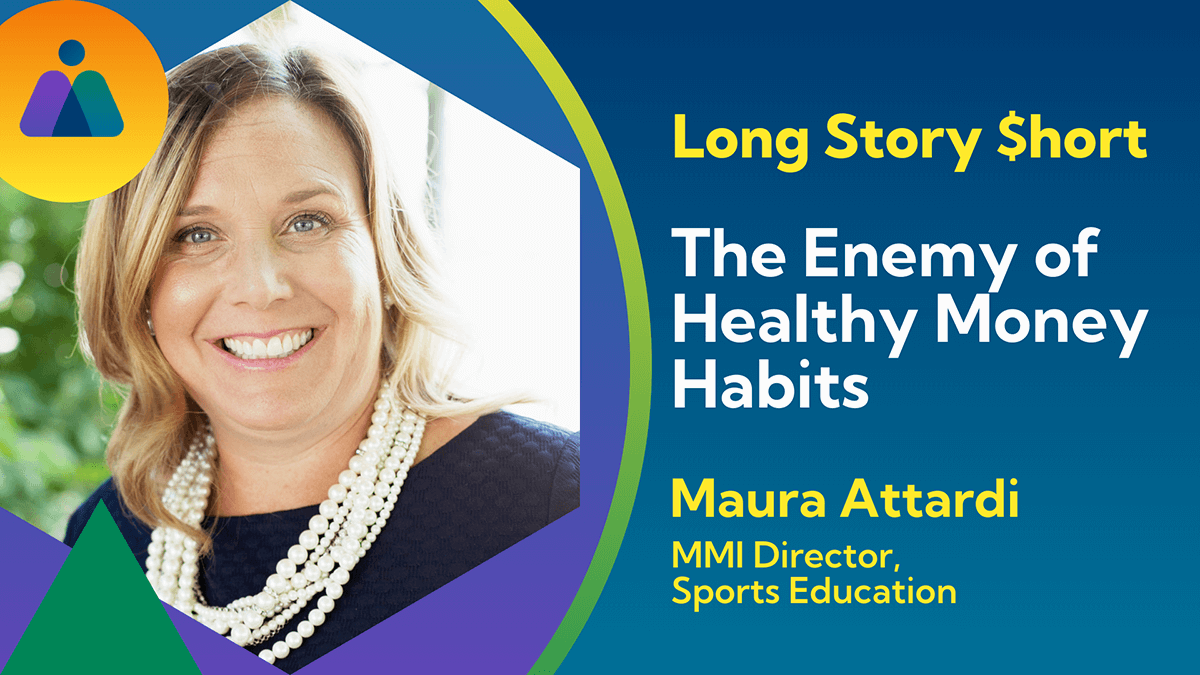
- Guest: Maura Attardi
- Host: Tara Alderete
- Publication Date: February 17, 2026
Highlights
- Maura explains her interest in the psychology of money management and why financial education can miss the mark when it doesn’t consider the emotions behind money decisions.
- Maura talks about how money trauma can have a lasting effect on our relationship with personal finance.
- Tara and Maura discuss why financial literacy alone isn’t enough to overcome many of the structural problems that leave so many in poverty.
- Maura explains why financial stress makes it harder to make good decisions.
- Maura shares why understanding your personal emotional responses to money issues can be the key to recognizing and breaking unhealthy patterns.
Episode Transcript
Note: Transcripts are machine-generated and may contain errors.
Tara: Hello, I am Tara Alderete. Welcome to Long Story Short. According to Experian, 68% of U.S. adults feel that they've suffered from financial trauma, and 65% of adults say that they've had negative thoughts or flashbacks or anxiety when dealing with financial issues. It's a pretty staggering statistic.
This is a topic that we're hearing more and more about recently, so today we're going to jump in and explore money trauma. Maura Attardi, Director of Financial Wellness here at MMI, is joining us today, and Maura is certified on trauma-sensitive approaches to money and dealing with money topics.
Here at Money Management International, we believe that financial challenges aren't meant to be faced alone, and financial wellness is a journey. On this podcast, we hear stories of people whose lives have been changed by MMI, and we also hear from the dedicated partners helping to make a difference. These stories are unique, personal, and inspiring. Stay tuned. We're sharing each guest's long story short.
Maura, we're excited to have you. Welcome to the show.
Maura Attardi: Thanks, Tara. I am so excited to be here, and I'm so excited that you want to talk about this because I think a lot of people don't want to talk about this, and I think it's so important when we're talking about folks and their kind of their journey to financial security. So thanks for having me on.
Tara: Before we jump in, you play a very instrumental role here at MMI, so tell us a little bit more about your role at MMI and you personally.
Maura Attardi: Sure. I have served the most of my tenure at MMI as the Director of Financial Wellness, which essentially is responsible for, you know, putting together programs for employers, organizations, credit unions, so that they're offering services to help the folks that they serve towards financial security.
I also am in a little bit of a niche area in our organization too as well, where I work with our professional and collegiate athletes through our sports education program on preparing themselves for their financial journey as they're entering the sports world.
So I've been with MMI now for almost 18 years, so I am thrilled to be part of this podcast, and I just love MMI and the way that we approach helping folks in our communities.
I live in the great state of New Jersey, and I love anything sports-related. I'm a big sports enthusiast. I have three kids. I'm also a dog mom. I have three dogs, so.
Tara: You have a pretty busy life.
Maura Attardi: Yeah. Yeah, I get to travel a lot, which is really cool. I do love traveling.
Tara: So, Maura, how did you become interested in the topic of money trauma?
Maura Attardi: Yeah, I mean, I think I've always been interested in that psychological piece of money management, but I think my interest in that behavioral aspect of personal finance and money started when I started to notice that that traditional financial advice or empowerment that people were providing, especially to our athletes and the folks that we were serving, it wasn't that it was ineffective, but I was I was noticing that things like saying, "Just make a budget," or "Pay your bills on time," that wasn't really a holistic approach to money. And I think money is an incredibly emotional topic, and it goes way beyond spreadsheets, numbers, math. And so I really started to become interested in diving deeper into the relationship that people have with money and why people make the decisions they do make when it comes to their finances.
Tara: Yeah, and why just saying, "Hey, build a budget," is reasonable and doable for some people and seems like an insurmountable task for others, right?
Maura Attardi: Yeah, absolutely.
Tara: What is money trauma, and why is it important?
Maura Attardi: Money trauma, first, I want to say I think that people sometimes forget the correlation or not necessarily forget, but they don't make the correlation or examine how deeply intertwined traumatic events that we experience, whether it's associated with money or not, how that impacts the fundamental needs that we have as human beings, right? Which, in my mind, it's like, as humans, we want to feel secure, and we lend a lot of weight to our self-worth, right? And so when we look at it, it's interesting because oftentimes in our society, money represents both of those, right?
Your self-worth and your need for security. And so if we have traumas in those areas, I think, then it just makes sense that the tool that we're using, money, I think it just makes sense that the financial tool is going to be affected and it's inevitably going to affect our relationship with money. And so trauma really is the emotional, the physical, we can't forget about the physical, and the psychological response that is associated with those financial experiences.
And those experiences could be anything. It could be like your family dynamics. It could be past experiences or setbacks maybe that you've had with money, or even how you interacted with money as a child, or how you observed people interact with money when you were a child, right? The adults around you. And honestly, I think the reason we're hearing a lot more about that is given our current political and economic climate that we're in, a lot of those money traumas, I think, are probably surfacing or resurfacing for people, or just increasing for people in general, right?
Tara: Yeah, and when you talk about the physical effects, when you think about how stressed folks are based on inflation and just things like that, and then you add that number we talked about, 65% of adults saying that they've had a negative feeling, we know how that can affect our body physically. So it's interesting. It is a no better time to, I think, talk about it.
Maura Attardi: Yeah, absolutely.
Tara: Traditionally in our society, particularly in our economic culture, I think people look at more money as less problems, right? Is that the case?
Maura Attardi: It's interesting because for a while there, Steve and I subscribed to that, like, more money, more problems, I originally thought. And I don't think that's necessarily the case. I would almost say that more money, less problems.
I mean, it could be. There recently was a study done by UPenn, like a joint study by UPenn and Princeton, that did show that people who were a little bit more financially well-off seemed happier, but if they came to the table with already underlying traumas or unhappiness, that more money didn't change that for them.
Whether you believe in those studies or not, or you want to talk about those studies to support anything, is up to you, but I think one of the main things that we have to realize is that our emotional well-being and money and our income isn't linked by one single relationship. And I think that's important to remember, right?
It becomes more complicated when you start to look at traumas or experiences that have directly affected our relationship with money. So it could be experiences like financial abuse or a sudden loss of an asset. It could be divorce. It could be, you know, maybe somebody has the inability to retire, or maybe somebody is suffering from financial infidelity, or maybe they've been evicted.
It's not one single relationship that equates our emotional well-being to money. You know, it's a little bit more complicated than that.
Tara: You know, it feels like almost everything that we experience or do has a financial component. So even if it's not a direct, you know, I was evicted or something like that, a direct consequence of lack of money, almost always there's a financial component to anything we do, right? Even a joyous event, you have a child, your family gets bigger, your money is directly impacted. And so I think understanding how those things sort of go together, it makes a lot of sense.
Maura Attardi: Also recognizing that the emotions that become tied to those events, those are the ones that either move us to action or stop us from moving to action, right? And so something like if we're evicted, really, it's not about numbers at that point. It's about the feeling of my security, right, is now challenged, and so how do I respond to that?
Tara: Right. And then it sort of goes back to that retail therapy, right? That makes me feel better, and then I get myself into a situation where I'm worse off than I was in the first place, and I'm not sure how to get out. It leads to all these different consequences.
Maura Attardi: Yeah.
Tara: There's another interesting number here. So our country is spending over $600 million in financial literacy initiatives. If that's true, wouldn't it make sense that as a country, we wouldn't see such a widening wealth gap or so much poverty? So why is it that financial literacy doesn't stick?
Maura Attardi: You would think that spending hundreds of millions of dollars, right, on financial literacy sounds like it would shrink poverty and our wealth gap. But if we make that assumption, that assumes a world where knowledge is the main missing ingredient. And in reality, I don't think that's usually the case.
The first thing I would say is you can't budget your way out of a structural problem. Financial literacy, like when you look at it, it does help people make better choices at the margin, but it doesn't change some of the structural problems we see, like lower wages or rising costs in housing and healthcare and education or debt-heavy systems like student loans, medical debt, high-interest debt. And so I would say if somebody's income is barely covering rent and food, knowing how compound interest works doesn't create a surplus for them to invest.
But I think financial empowerment is incredibly valuable. It's just, in my opinion, sometimes timing matters more than the content. Oftentimes we see financial education or empowerment, whatever we want to call it, comes either too late after debt is already accumulated, or it's too abstract, right? We're giving just theoretical examples to folks and not real-life decisions that they have to make.
Tara: Right.
Maura Attardi: And then sometimes it's too detached from action. So again, if we go back to those trauma responses that we're talking about, it's important to remember, you already said it, like stress literally shuts down financial reasoning, right? Our body responds.
Like when we're constantly under financial stress, our working memory shrinks, our long-term planning suffers, our risk assessment worsens, right? We don't make as good decisions. And oftentimes people look at that as failing, like I'm just not good with money, when in fact it's really neuroscience, right? Teaching optimization strategies to someone in survival mode is almost like teaching somebody to play chess during a fire drill.
Tara: Right.
Maura Attardi: Keeping that in mind, that stress, that constant financial stress, and how we respond to that has a direct impact on the decisions we make. And the other thing too is sometimes the system is, I don't know, optimized against consumers, right? People are facing complex financial products that they don't understand. Sometimes people are falling prey to aggressive marketing strategies, right, that they don't have control over. And a lot of times people are penalized for their mistakes instead of rewarded for being cautious when it comes to money. So, I mean, it's weird. Sometimes financial education, empowerment, literacy can be ineffective because it asks people to be perfect in a system that profits from imperfection.
Tara: Interesting. And I think to your point, if we don't address the root of the issue, we just layer on these things that are meant to help, and all they really do is sort of hammer further into the ground.
Maura Attardi: Yeah. And I think also when we think about like pairing it with structural support, that's when it becomes the most effective, right? So like maybe some automatic enrollment into your retirement plan or a debt management plan, right?
When we have a solution or we pair it with something that supports that traumatic response or issue that we're having with that relationship with money, like more easier to understand financial products or match savings programs, that's when financial literacy becomes really, I think really effective and empowering and powerful for people.
Tara: Sure. So we're doing all these things together. We're directly addressing the problem. You can see momentum and success each day. We're providing the education so that it doesn't happen again, but we're also addressing the root cause of the issue, which is why it happened in the first place. So when you come out the other side of that tunnel or journey, you're in a completely different place, and I think it's huge.
So we've talked about why this is such an important issue. How does money trauma affect us, and what patterns should we be looking for? You know, I think a lot of times people, just like any other type of trauma, they'll say, "Well, that was a difficult situation, but I'm okay. I'm fine." And then things happen, and then really it turns out that they're not fine, and they don't realize it until they're stuck in a situation where they're stuck in a situation. So what patterns can people look for?
Maura Attardi: That's an important question because money trauma kind of like sits at this intersection of psychology, identity, survival, and oftentimes like the behaviors that we see look irrational on the surface to folks, but actually make perfect sense once you understand the story underneath. And so I think, you know, the first thing is understanding your relationship with money, how past events can impact your decision around money moving forward is really incredibly important.
I mean, money trauma at the most basic level is kind of like an emotional imprint left by experiences like where money or the lack of money were tied to feelings, right? Like fear, instability, shame, powerlessness, conflict, or that loss of safety. So, you know, your nervous system kind of remembers how unsafe you felt, and your spreadsheet doesn't. I think being aware of how your nervous system reacts is really, really important.
But I think some things that we can be attuned to or some patterns that we could look for when it comes to like that fight, flight, freeze, or fawning sort of response that we have when it comes to money, it would be something like maybe not checking your bank accounts, right? Or ignoring your bills until the last minute, or putting off your taxes or a debt review simply because like the core belief there is that if I look, it's going to make it worse, or I can't really handle the truth, right?
Or if you're dealing with a trauma that's rooted in control and perfectionism, like obsessively tracking your expenses and then, you know, having anxiety over these small expenses or feeling unsafe unless everything is just right, are other ways that that core belief there is like if I relax, everything is going to fall apart. And that's also not healthy in itself.
And then you even have like that kind of what they call scarcity looping, right? That constant fear of not enough, even when there is stability. And to be honest with you, I kind of grew up in a household like that. That's really how what it looked like in our house. Like there was this constant fear of not having enough. And I know it's, you know, my mom from poverty. And even when we did have enough, there was this constant anxiety around.
Tara: It won't last.
Maura Attardi: Not having enough, even though we all knew there was enough there. And so like that really lends to that core belief of like safety is temporary and disaster is coming. And then you, you know, you have this self-sabotage, like folks that maybe are dealing with those periods of deprivation, and then all of a sudden they overspend or they use money to regulate emotions. I think you referred to it before as.
Tara: Retail therapy.
Maura Attardi: Retail therapy, right? Or the feeling undeserved or undeserving of stability, right? And so that's that core belief of I don't get to keep good things, right? And so sometimes that gets rooted in like, now what do our actions show, right? Like I'm not worthy, I'm not good with money, so let me give it away so I don't even have to deal with that.
Tara: Yeah. So it's noticing our feelings, our behaviors, our beliefs, all those different things together.
You referred to financial shame, and I wanted to talk about that for a minute. So I think financial shame could mean a lot of different things, right? It could be financial shame for just a situation that you simply grew up in. And I think also financial shame can sort of come from guilt, right? Decisions that we've made in the past and we have guilt or shame around that.
So how does financial shame impact debt for people? And how do we react to financial shame and debt? How are those linked?
Maura Attardi: So I think you brought up two important words, guilt and shame. For me, like guilt is like I made a mistake, right? And we have a series of mistakes. Shame kind of manifests as like I am the mistake, right? And so I feel like financial shame says I should know better. I'm irresponsible with money, right? Or everyone else has it figured out.
And I think the issue with shame and how it might be linked to debt is that shame thrives in secrecy, right? We don't ever want to put that out there. And so I think shame and debt feed into each other in a vicious loop. Debt creates anxiety and shame, right? And then shame triggers avoidance, right? Because we don't want to kind of like.
Tara: Deal with it.
Maura Attardi: Let it in, recognize it.
Tara: Right.
Maura Attardi: Avoidance leads to missed payments, fees, worse terms. Our debt continues to grow. And as our debt continues to grow, what happens, our shame continues to grow, right? And so I think people, when we look at shame and debt, people oftentimes delay asking for help.
Tara: Right.
Maura Attardi: As a result, or they choose maybe a short-term relief to get some reprieve from that deep-rooted shame that they're feeling. And really, I think shame makes debt worse, not better.
Tara: That root cause, right? It's that underlying issue that if it's not addressed, it just continues, as you said, that vicious cycle.
So I'm going to ask you sort of a personal question. You're an expert on this stuff, and you're an expert on money and financial wellness. But I think everybody experiences things. And that's one of the points of this podcast is sort of talking about things so that we can break that stigma. So I want to ask if you can share with us an example for you where there's been a traumatic event that has impacted your relationship with money.
Maura Attardi: Yeah. I mean, I've had plenty. You know, I talked a little bit about what it was like growing up in our household. And I think that experience shaped how I responded to some of the traumatic events in my life. I mean, about five or six years ago, I navigated a divorce and immediately my sense of security and moving from a dual-income household to a single-income household was, I think, incredibly challenging for me. And even as I was going through that traumatic event, I didn't want to discuss it. I didn't want the conflict.
And then shortly after that, I was diagnosed with breast cancer. So I'm a breast cancer survivor. Yay. Even with that, something as simple as my sister had suggested setting up one of those, not a GoFundMe, but like an InKind where, you know, friends and family who wanted to help could make meals while I was navigating chemotherapy and things like that. And I remember being very hesitant to allow that to happen because I felt shame, right? I was like, wait, I should be able to manage this myself, right? I should be able to navigate this. I don't need anybody's financial help.
And so I think that kind of correlates to that idea of shame where like it's, you know, when we need help, it's okay to ask for help and look for those resources that will provide help, whether it's if you're navigating debt and you need to reach out to MMI or an agency that can assist you with that debt, or relying on family and friends in a temporary time of need. And so, you know, with those traumatic experiences, the good thing is that I certainly was able to recognize those and accept the help when needed, but it didn't change the initial reaction and emotion that I felt around it.
Tara: Thank you for sharing that with us. You know, I think it's important because I think a lot of times, whether it's a divorce or an illness or some other big event that has impacted our life and our financial situation, we tend to feel like it's just us. And it feeds these topics that we've been talking about. So typically when people are stressed about money or stressed about anything, they're not able to discern the best next steps for themselves or their families.
So how can we overcome these traumatic events like divorce, like illness, and build a healthier relationship with money and spending so that going forward, we can better navigate those situations financially?
Maura Attardi: I think the initial thing that people can do is recognize them, right? And whether that means that you are seeking the help from a financial therapist or somebody that you trust or somebody that cares about you, I think recognizing that we have had these past experiences that are impacting is the first step.
I think the next thing, though, is it's really important to discern whose shame it is. Like my reaction in the example I gave you was that's not my shame to carry, right? And so I think first recognizing it and validating it, I think, is really important for people.
And then maybe looking at those past habits, those past spending decisions that we made, put them out on display, which is hard for people to do when they're dealing with shame, but put them out on display so that you can forgive yourself and kind of move forward to making better decisions and reimagining what you would like your relationship with money to look like, right? Then you can create a plan with your values.
One really awesome exercise that we did as we were going through this trauma of money certification was we actually wrote a letter to money as if it was real and something that we wanted to talk to. And it allowed us to explore our past relationship with money and what we wanted it to look like moving forward. I know it might seem silly to write a letter to money, but it's an exercise that allows us to recognize that relationship and then reimagine what we want it to look like moving forward.
Tara: Sure. How can we work together, right? Like how can this be a partnership like everything else in life? That's a fantastic tip. And it sort of leads into the next question. It answers part of the next question, but I was going to ask, so what are some practical things that people can do or start doing today if they're not experiencing, you know, a trauma or a difficult event? They're just listening to this podcast and thinking, well, what can I do today to better my relationship with money?
Maura Attardi: Starting with that letter, or even if you're not comfortable writing a letter to money, just taking an honest look at your current relationship with money and then making sure or reimagining what you want it to look like moving forward. Some people might say that that's like setting a goal or prioritizing. And I think those are very, very powerful. But I think we have to take that honest look at our relationship with money.
And the other thing too is like have conversations around it. There is such a stigma around money. People don't like to have this conversation about money. And so I think even starting small by putting it out on display. Now, you don't have to announce it to the world. You don't have to go on a podcast to do that. But maybe having somebody that you trust and having, you know, small conversations about money and looking at ways that you can reimagine what you want that relationship to look like moving forward.
If you're dealing with bigger issues like debt, you know, it's hard to let go of shame, but ask yourself whose shame is this and then what resources are available to me moving forward and make that call, right? A lot of people won't make that call. And I think that's really important, you know, moving to action.
Tara: So let's talk for a minute about resources. If folks want to learn more about this topic and start to strengthen their relationship with money and address issues that they may have dealt with in the past so that they can build a really strong emotional foundation around money, where can they go? Where can they look for more information and resources about this?
Maura Attardi: It is such an emerging topic that there's a lot of information out there, whether it's behavioral therapy. But the recent certification process or the program that I went through to get certified in the trauma of money, Chantelle Tappman, who is the author of the book, The Trauma of Money, is a really great read for folks if they're looking to really kind of like start to discern their relationship with money.
That's another really great resource. I would say reaching out to MMI. Our counselors are very empathetic and compassionate and are willing to help people not just with a solution, but navigate that relationship that they currently have with money and utilize the solution to get to where they want to be is another great resource.
Tara: Yeah. You don't have to be in trouble to take advantage of these resources. And I think sometimes it can be more effective if you're not. You know, if you come to these resources and this sort of table, while you're not in the midst of a crisis, you may receive things a bit differently. So thank you for those resources. I think they're important.
This has been such a good discussion about this topic that, again, you know, you said it's a very emerging topic and I feel like we hear more and more about it. We had somebody on the show recently that talked about financial abuse and what that looks like and overcoming that. We're trying to do a lot to break that stigma and shame. And I think this conversation is going to go a long way in doing it.
So before we wrap up, I just wanted to give you the opportunity to talk about anything that we may have missed or if there's anything else that you'd like people to know when they walk away about this relationship with money and this topic of money trauma.
Maura Attardi: Yeah. It is a relationship and relationships aren't built in minutes or overnight. And so there's going to be these challenges and there's going to be mistakes made along the way. And I would just encourage people to be kind and gentle to themselves and forgive themselves when it comes to money mistakes and also realize that there are resources out there. It's not a journey that you have to go on alone and you don't have to continue to carry this feeling of shame or trauma alone. I mean, I think that would be my biggest piece is just be kind and gentle to yourself and forgive yourself.
Tara: Yeah. I love that. I love that. And I think it's something we should all practice today. So Maura Attardi, Director of Financial Wellness here at MMI, thank you so much for joining us today. I've loved talking to you as I always do. I appreciate you joining us for the show.
Maura Attardi: It's been awesome.
Tara: Thanks for listening to this episode of Long Story Short, brought to you by Money Management International. To learn more about our work and how we're helping people in all walks of life repay debt, balance their budget, and find lasting financial peace of mind, visit moneymanagement.org.
Return to main podcast page